Shanxi Jianing Forging can process large-diameter pressure vessel shell forgings made of carbon steel, stainless steel, and alloy steel. The station has a wealth of real-world cases of cylinder forging, fully demonstrating the forging capabilities of large-size cylinders and the corrosion-resistant results of finished products.
In an upgrade project of a certain petrochemical plant, the core pressure-bearing components of the cylinder forgings directly affect the long-term reliability of the equipment. The petrochemical plant is located in Dezhou, Shandong. Previously, issues such as uneven internal structure and large machining allowances caused by traditional forging processes affected the equipment's sealing performance and service life. After receiving this batch of cylinder forgings, Caring Forging conducted an in-depth analysis of users' requirements for fatigue strength and material density under high temperature and high pressure, and optimized the forging and heat treatment solutions accordingly.
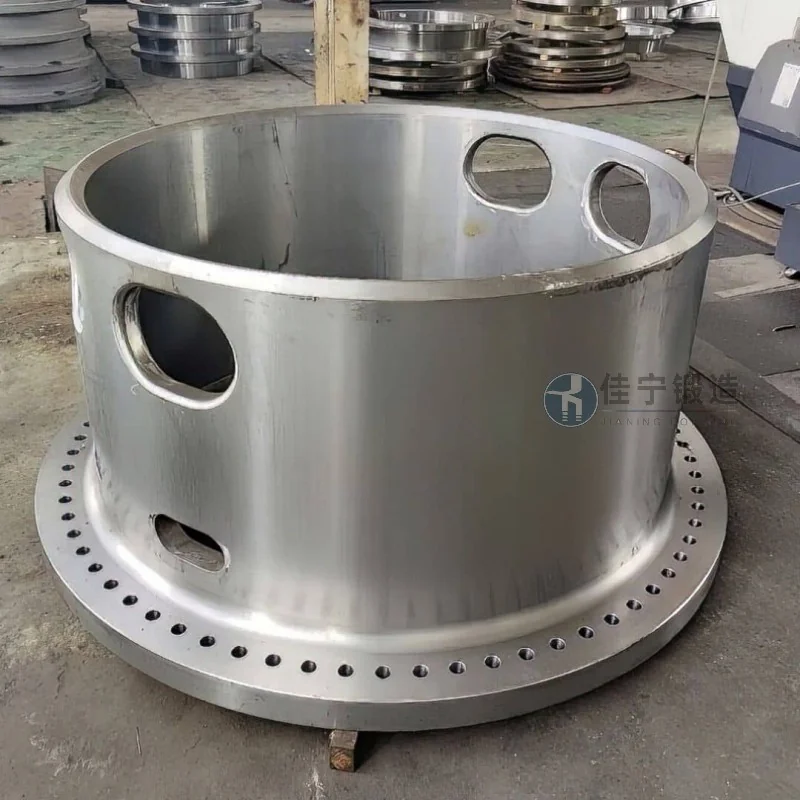
The original cylinder forgings at this petrochemical plant exhibited local coarse grains and low flaw detection pass rates during service, leading to an increase in scrap rates during later machining and making delivery cycles difficult to support. At the same time, because petrochemical facilities have strict safety standards, even the slightest internal defect can trigger leakage risks in high-temperature and high-pressure environments, making users urgently need a forging solution that can stably control internal mass.
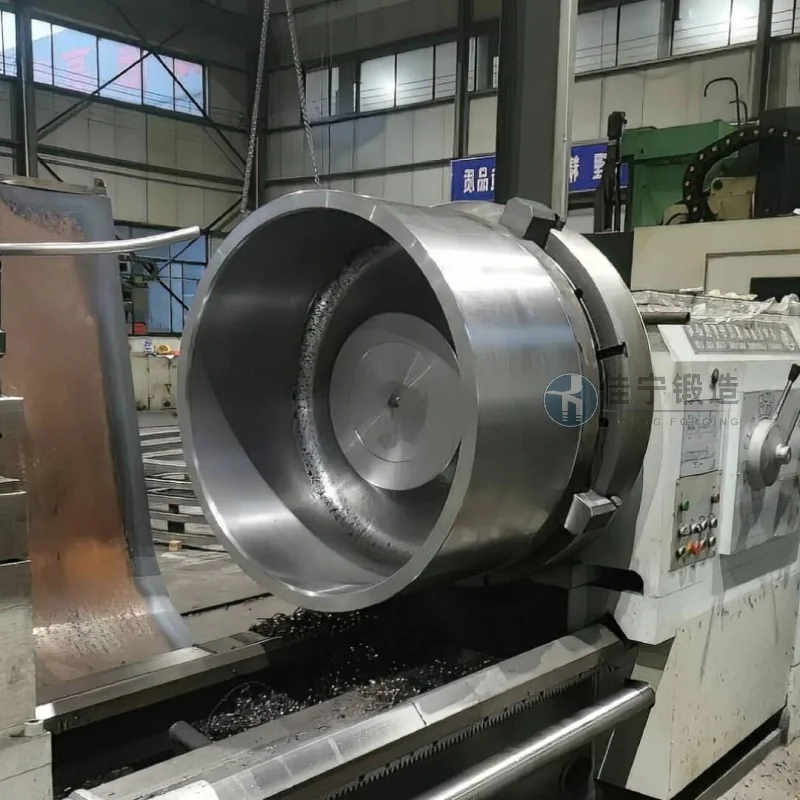
During the technical review stage, Jianing Forging adopted multi-directional forging and grain refinement control processes. By accurately setting heating temperature, deformation, and cooling rate, coarse grains and banded structures were effectively eliminated, resulting in stable matching of longitudinal and transverse performance of the forging. At the same time, by utilizing CNC machining and near-net forming technology, the blank allowance is kept within a reasonable range, reducing the time users need for subsequent machining. The final delivered cylinder forgings underwent ultrasonic testing, and all indicators met the requirements of the NB/T 47008 standard, with an improved flaw detection pass rate and helped users shorten the overall equipment assembly cycle.