Shanxi Jianing Forging provides customized processing of lightweight aluminum alloy forgings and aluminum flanges. The on-site aluminum alloy forging project cases are complete, with products that are lightweight and meet strength standards, compatible with new energy and lightweight equipment.
In the field of metallurgical heavy industry, the quality of alloy steel forgings directly affects the stability of equipment operation and service life. A heavy metallurgical factory in Weinan, Shaanxi (hereinafter referred to as the "Customer") encountered issues such as uneven internal structure of forgings, large fluctuations in mechanical properties, and large machining allowances leading to material waste during the production of key components. There was an urgent need for a stable and highly consistent alloy steel forging solution.
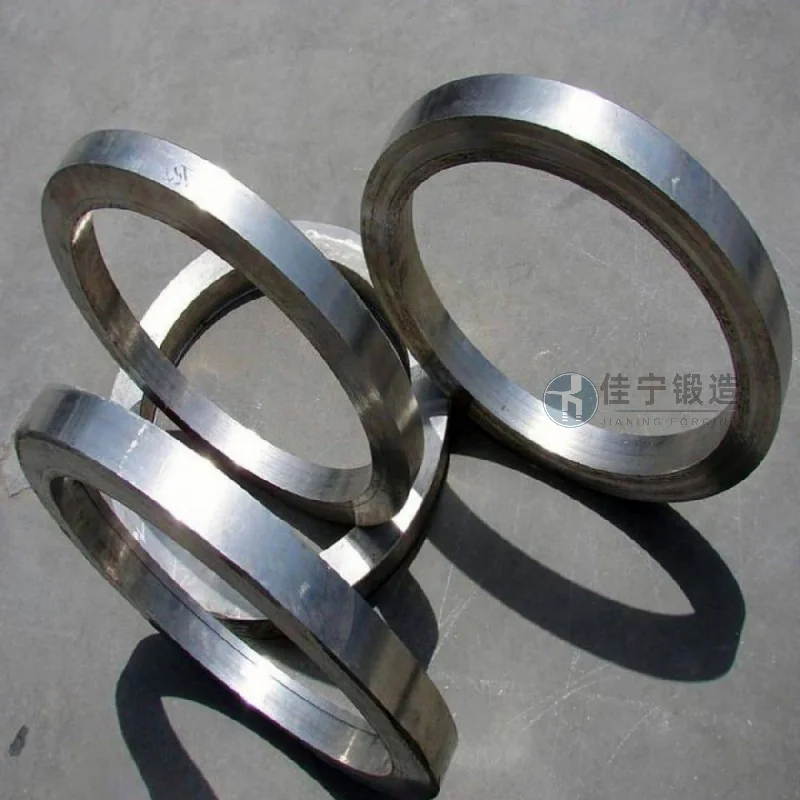
This customer mainly manufactures core components of metallurgical equipment, with alloy steel forgings used in high-load conditions such as rolling mill frames and gear shafts. Previously, forgings used by customers often exhibited uneven hardness distribution and insufficient impact toughness after heat treatment, resulting in low yields and frequent abnormal tool wear during subsequent machining, seriously affecting production cycle times and cost control. After extensive comparison, the customer ultimately chose to cooperate with us (Jianing Forging) to carry out specialized development tailored to their specific material grades and heat treatment requirements.
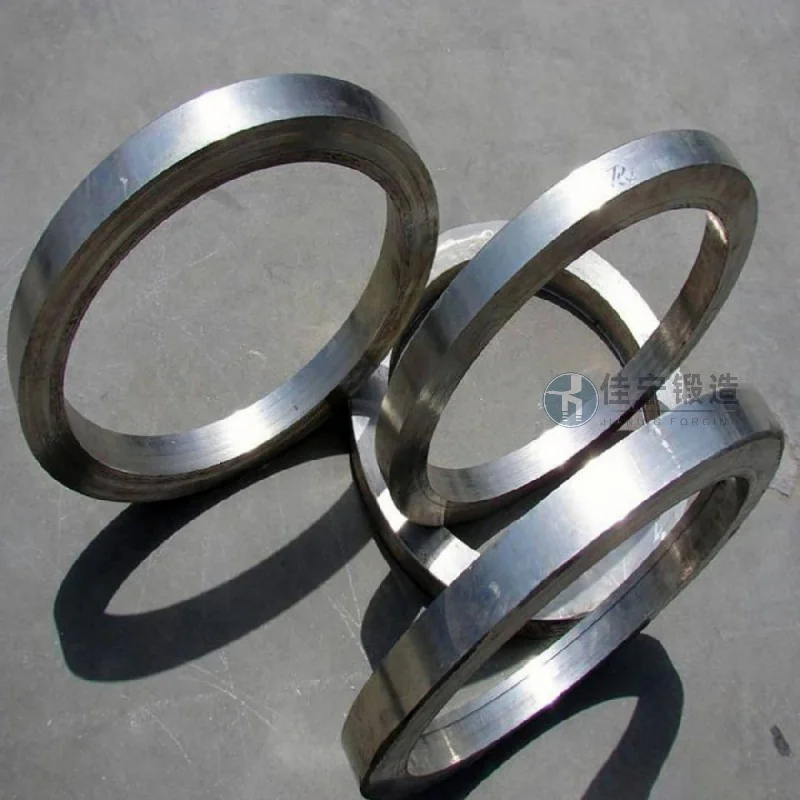
1. Poor internal microstructure consistency: The original forging's grain size control after forging is unstable, with coarse grain areas leading to high mechanical dispersion and a drop of about 15% in impact toughness in some batches.
2. Excessive machining allowance: Due to insufficient deformation control of forgings, customers need to reserve more machining allowance, resulting in low material utilization and increased cost per scrap piece.
3. Obvious heat treatment deformation: High deviation rate after quenching, requiring additional straightening steps to extend the processing cycle.
4. Tight delivery times: The maintenance window for equipment in metallurgical heavy factories is short, with strict requirements for timely delivery of forgings.
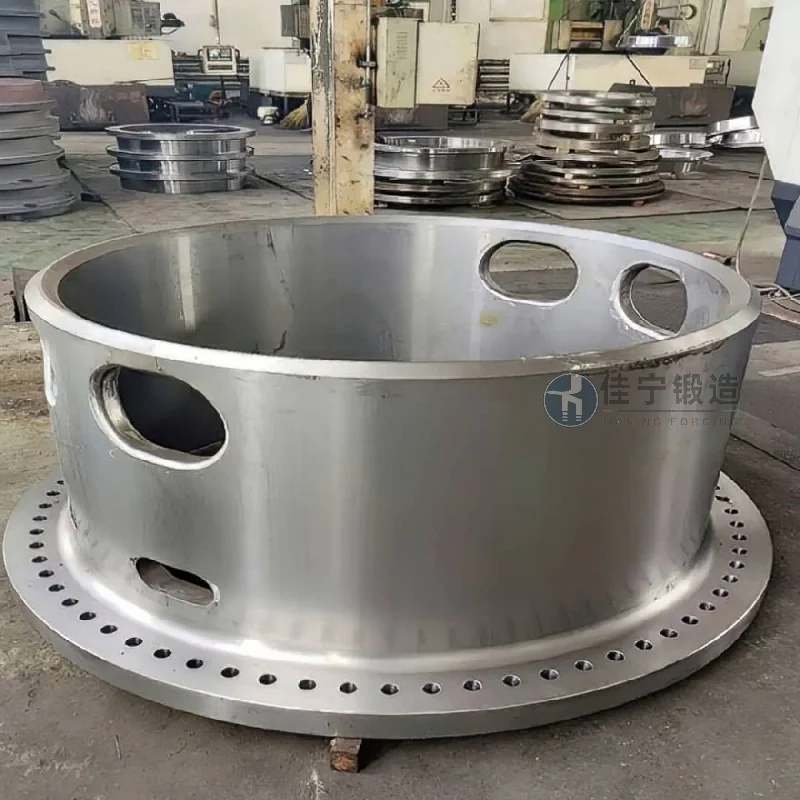
To address these issues, Jianing Forging offers the following customized solutions:
1. Relatively accurate temperature-controlled forging process: Uses multi-stage heating + temperature-controlled forging technology, combined with specialized tooling, to help the forgings achieve uniform grain refinement during forming. By real-time monitoring of billet temperature and deformation rate, grain size is stably controlled between 7 and 8 levels, reducing fluctuations in mechanical properties.
2. Near-Net Forming Design: Based on the customer's actual blank drawing, the forging parting line and allowance distribution are optimized, reducing the single-side machining allowance from the conventional 15mm to 8mm~10mm, improving material utilization by over 12% and reducing subsequent machining man-hours.
3. Simulated auxiliary heat treatment: Using finite element simulation software to predict quenching deformation trends, adjusting the selection of quenching medium and the solution injection method, keeping deformation within 0.5% without additional straightening and helping to ensure uniform depth of the hardened layer.
4. Full-process control: From raw material warehouse inspection and forging process recording to heat treatment curve monitoring, full data traceability is available. Combined with the pre-scheduling system, conventional delivery cycles are compressed by 15%~20% to meet customers' urgent maintenance needs.
Through these measures, after switching to our alloy steel forgings, the finished product rate increased from 82% to 95%, single-piece machining time was shortened by about 25%, and overall costs dropped by about 10%. Currently, both parties have established a long-term stable cooperative relationship, and this forging solution has strong replication among similar metallurgical heavy factories.