Shanxi Jianing Forging has gathered real-world cases of wind power flange rings, ring gears, bearing rings, roller rings, and other ring landings, with a complete range of finished forging products for carbon steel, stainless steel, and alloy rings, providing reference for product selection and non-standard solutions.
A ship parts factory in Dalian, Liaoning, set extremely high requirements for the dimensional accuracy, mechanical properties, and batch stability of ring forgings when producing key marine equipment. The company has long faced the problems of long processing cycles and high scrap rates for traditional forgings, urgently needing a more reliable ring forging supply solution.
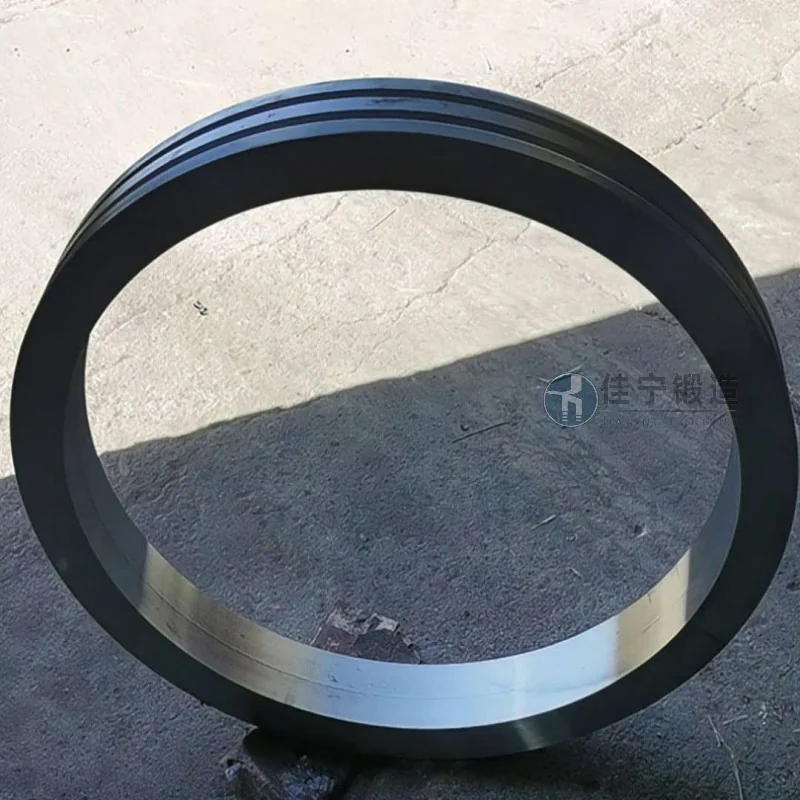
Customers encounter the following difficulties in actual production:
1. Large coaxiality deviation between the inner and outer diameters of ring forgings leads to insufficient machining allowance for subsequent processing;
2. Uneven internal microstructure density of forgings, with microcracks appearing in some batches;
3. Delivery cycles are limited by multi-process outsourcing, making it difficult to match the tight scheduling of shipbuilding projects;
4. High quality control costs under the multi-supplier model, with significant performance differences between batches.
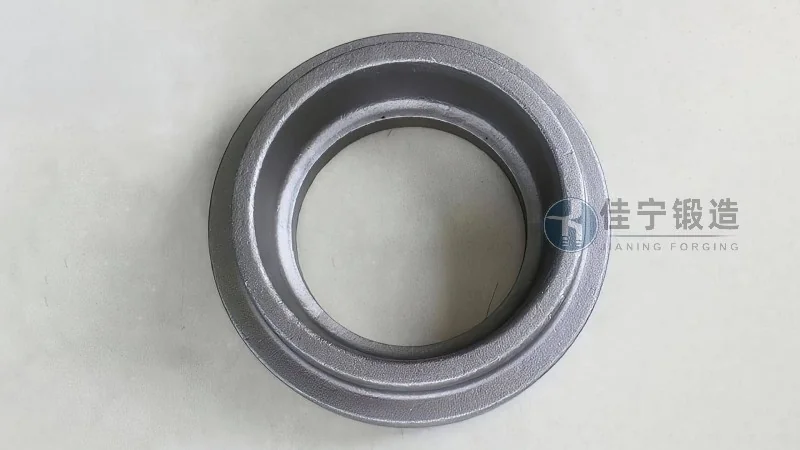
Jianing Forging addresses these pain points by providing customized overall solutions for ring forgings:
1. Uses fine grinding ring technology and multi-pass temperature-controlled forging, helping to keep the coaxiality of inner and outer diameters within 0.5mm;
2. Through full-process metallographic inspection and ultrasonic flaw detection, internal defects are eliminated, helping to densify forgings;
3. Relying on our own heat treatment workshop and CNC machining center, we achieve one-stop delivery from raw materials to finished products, shortening the cycle by about 30%;
4. Establish a batch traceability system, with each forging accompanied by a complete material report and dimensional inspection records.
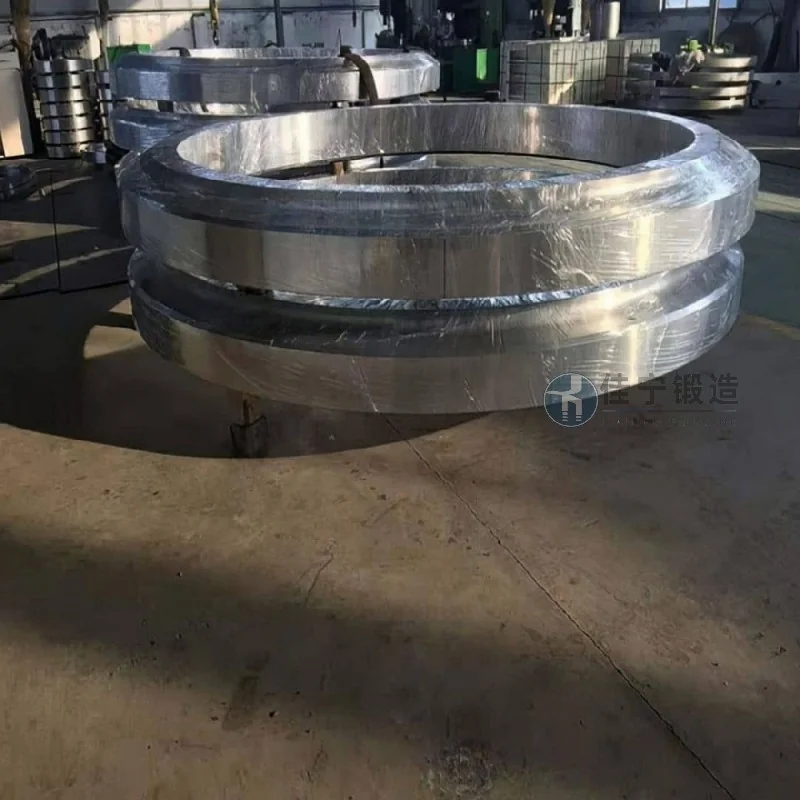
After introducing Jianing forging ring forgings, the first-pass pass rate for the ship parts factory increased to over 98%, and the subsequent machining scrap rate dropped by about 70%, effectively supporting the overall delivery progress of the project. Both parties have established a long-term and stable supply partnership, and this case has become a typical reference for domestic substitution of shipboard forgings.