Shanxi Jianing Forging has gathered real-world cases of wind power flange rings, ring gears, bearing rings, roller rings, and other ring landings, with a complete range of finished forging products for carbon steel, stainless steel, and alloy rings, providing reference for product selection and non-standard solutions.
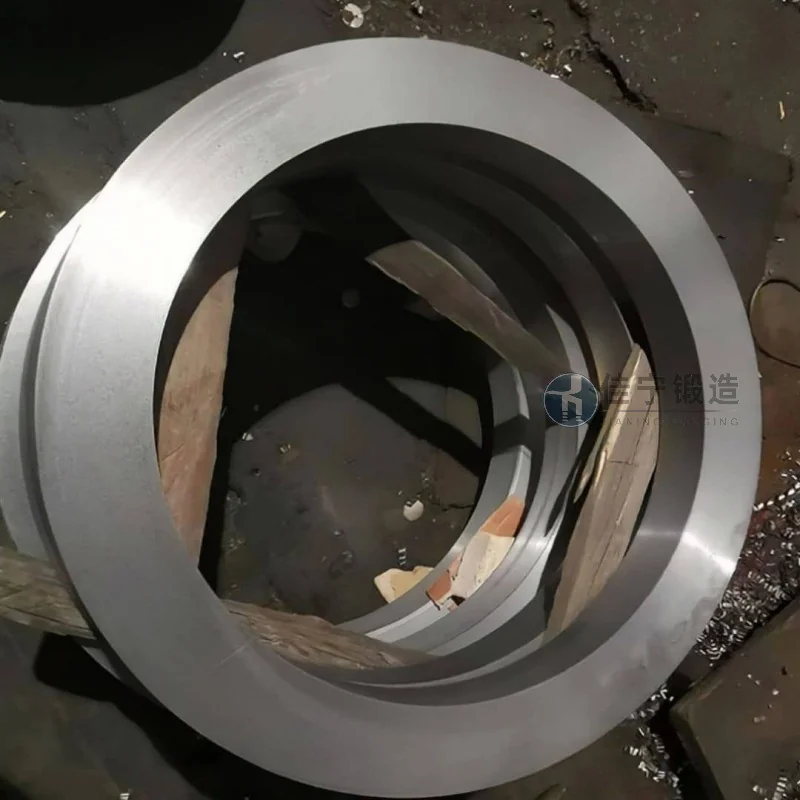
A mechanical parts factory in Wenzhou, Zhejiang, mainly engaged in the production and processing of various mechanical components. During the mass production of ring forgings, it has long faced issues such as large product dimensional deviations, low material utilization, and unstable delivery cycles. After trying various process adjustments, the factory still failed to meet the quality requirements of the customer, so it sought cooperation with suppliers with mature forging processing capabilities.
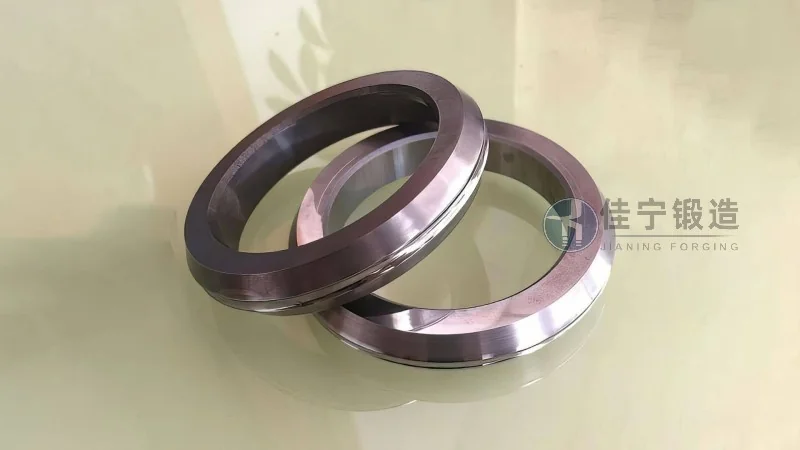
The factory encountered the following core challenges in ring forging production: 1. The concentricity deviation of the inner and outer diameters of processed ring-shaped parts exceeded the drawing tolerances, resulting in uneven machining allowances and a persistently high defect rate; Second, the material utilization rate of traditional forging processes is only about 65%, generating a large amount of cutting waste per batch, significantly driving up production costs; Third, due to the lack of systematic heat treatment control, the internal structural uniformity of the forgings is insufficient, and some finished products face early failure risks during subsequent use; Fourth, supplier delivery times fluctuate greatly, often affecting the downstream assembly progress of the factory's complete machines.
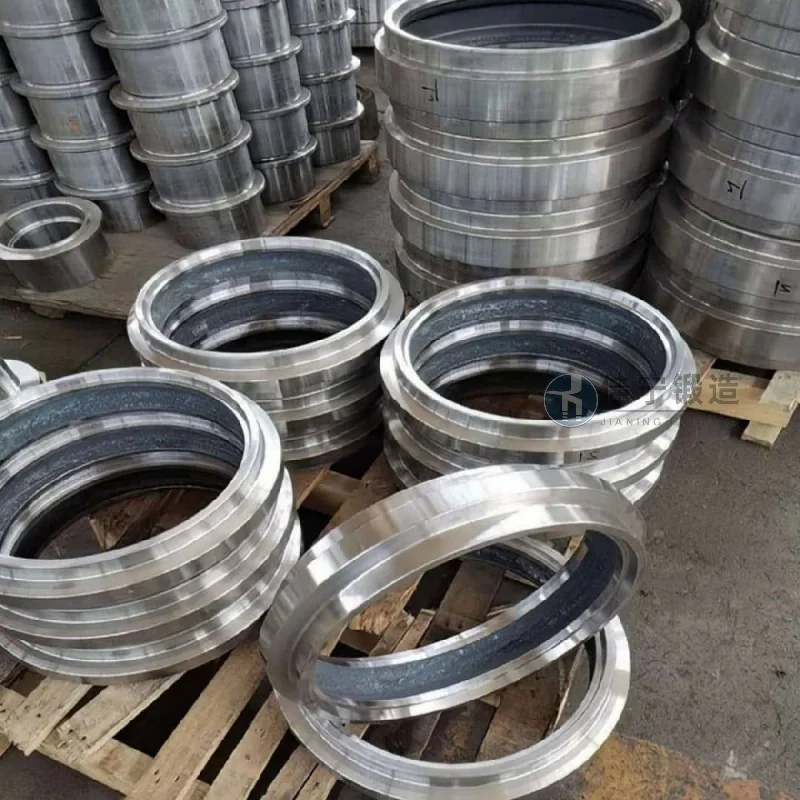
To address these pain points, Jianing Forging provided the mechanical parts factory with a customized ring forging solution: by optimizing mold design and forging ratios, the coaxiality of the inner and outer diameters of the ring parts was controlled within 0.3mm, reducing subsequent machining allowances; By adopting a near-net forming process, material utilization was increased to over 82%, thereby reducing raw material loss; Introducing a controllable atmosphere heat treatment line helps refine forgings and uniform microstructure, keeping hardness variance within ±3 HRC; At the same time, we have established a full-process traceability system from raw material entry to finished product shipment, promising delivery errors of no more than 2 days to support customer production continuity.