Shanxi Jianing Forging has gathered real-world cases of wind power flange rings, ring gears, bearing rings, roller rings, and other ring landings, with a complete range of finished forging products for carbon steel, stainless steel, and alloy rings, providing reference for product selection and non-standard solutions.
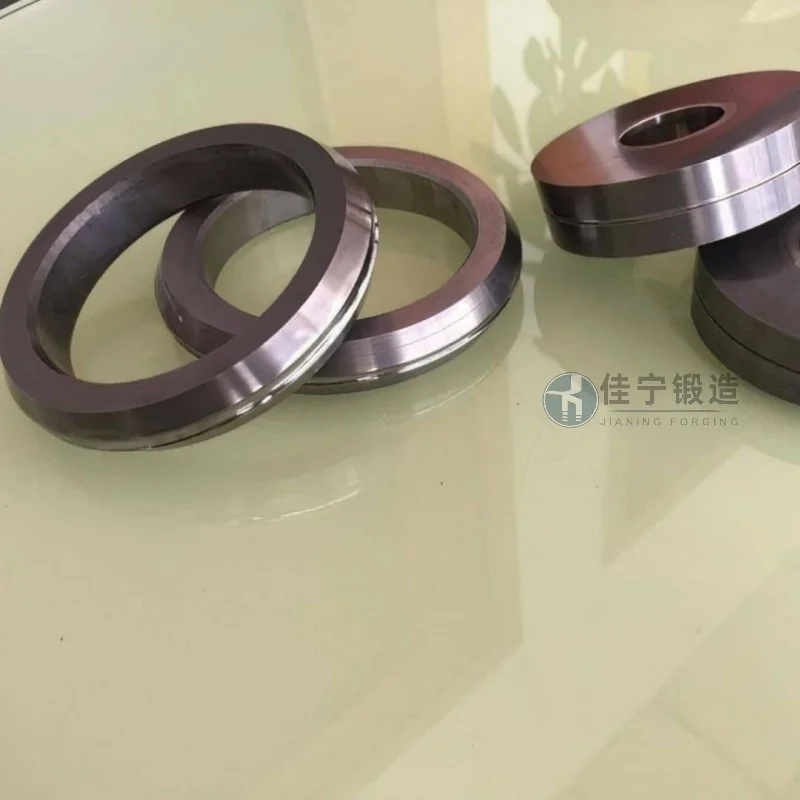
A wind power parts factory faced a series of production bottlenecks in the procurement of ring forgings. The factory mainly produces key components such as wind turbine tower flanges and bearing rings, with extremely high requirements for forging strength, dimensional accuracy, and fatigue life. However, after long-term reliance on multiple suppliers, it was found that forging quality was uneven, with some batches having internal defects, resulting in a persistently high scrap rate of finished products. At the same time, suppliers' delivery cycles fluctuate greatly, affecting the assembly schedule. The client urgently needs a forging partner with stable process capabilities and strict quality control.
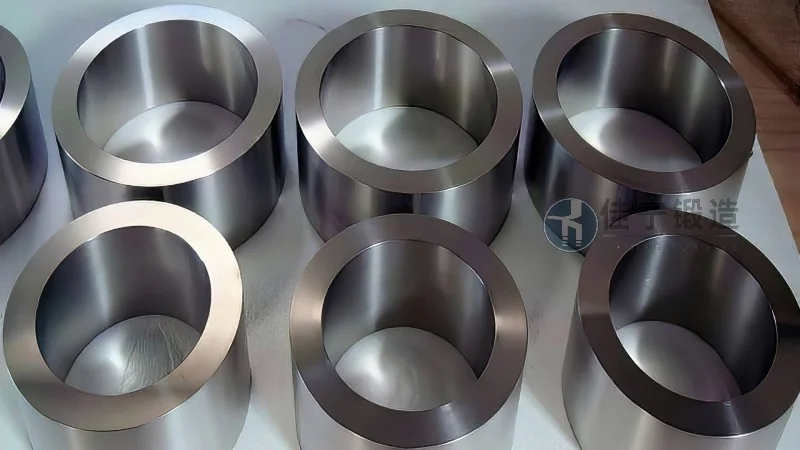
The core pain points of this wind power accessories factory focus on three aspects: First, poor consistency of forging products, with large dispersion of key indicators such as hardness and grain size within the same batch, making it difficult to meet the reliability performance requirements of the wind power industry; Second, delivery cycles are uncontrollable, especially during large orders or urgent replenishment orders, where suppliers cannot deliver on time, causing production line downtime losses; Third, testing standards are not unified. Suppliers provide warranty documents lacking complete nondestructive testing and mechanical performance test data, increasing customers' own re-inspection costs. These pain points directly lead to higher project costs for clients and slower market response speeds.
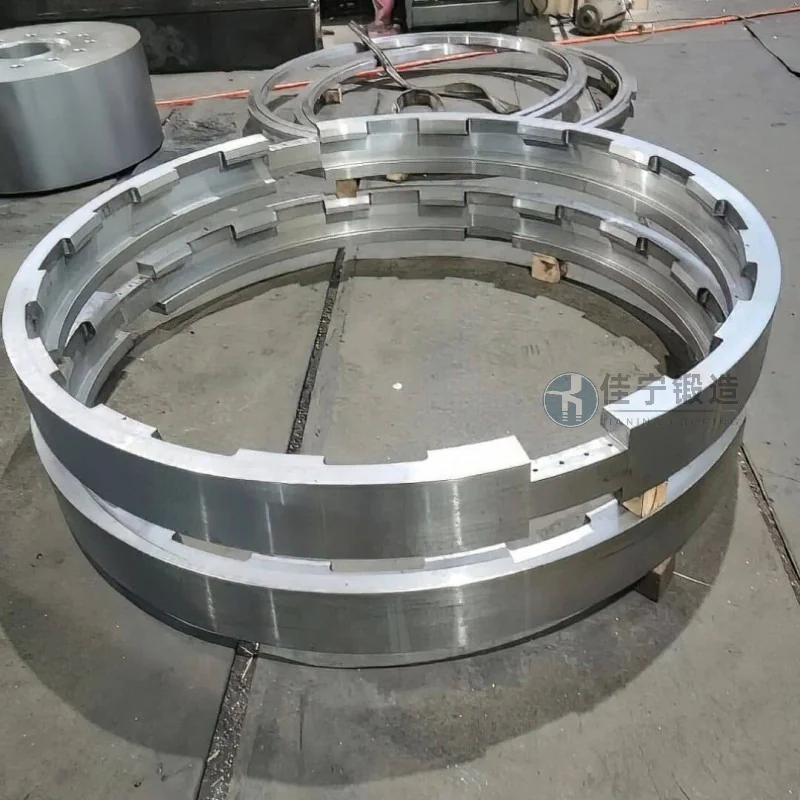
To address these pain points, Jianing Forging has provided a complete ring forging solution. First, by optimizing forging process parameters (such as final forging temperature and deformation control) and adopting specialized mold designs, it helps ensure that dimensional tolerances in mass production are kept within ±0.5mm, grain size reaches above grade 7, and product consistency is improved. Second, a flexible scheduling system has been established, relying on its own forging production line and heat treatment workshop to shorten the delivery cycle for regular orders to 15 working days, and for urgent orders, it can be compressed to within 7 working days. Additionally, each batch of forgings comes with a complete set of inspection reports including ultrasonic flaw detection, magnetic particle testing, and room/low-temperature impact testing, allowing customers to avoid a second re-inspection. These measures helped the customer reduce forging scrap rates by about 60%, reduce overall procurement costs by about 12%, and support the pace of wind turbine assembly.