Shanxi Jianing Forging has gathered real-world cases of wind power flange rings, ring gears, bearing rings, roller rings, and other ring landings, with a complete range of finished forging products for carbon steel, stainless steel, and alloy rings, providing reference for product selection and non-standard solutions.
In the field of mining equipment, ring forgings, as key structural components, directly affect the reliability and service life of equipment operation. A mining equipment factory in Zhengzhou, Henan, has long faced issues such as fatigue cracks, deformation, and even breakage in ring forgings under heavy loads and high-impact working conditions, resulting in frequent equipment downtime and maintenance, putting pressure on production efficiency and operating costs.
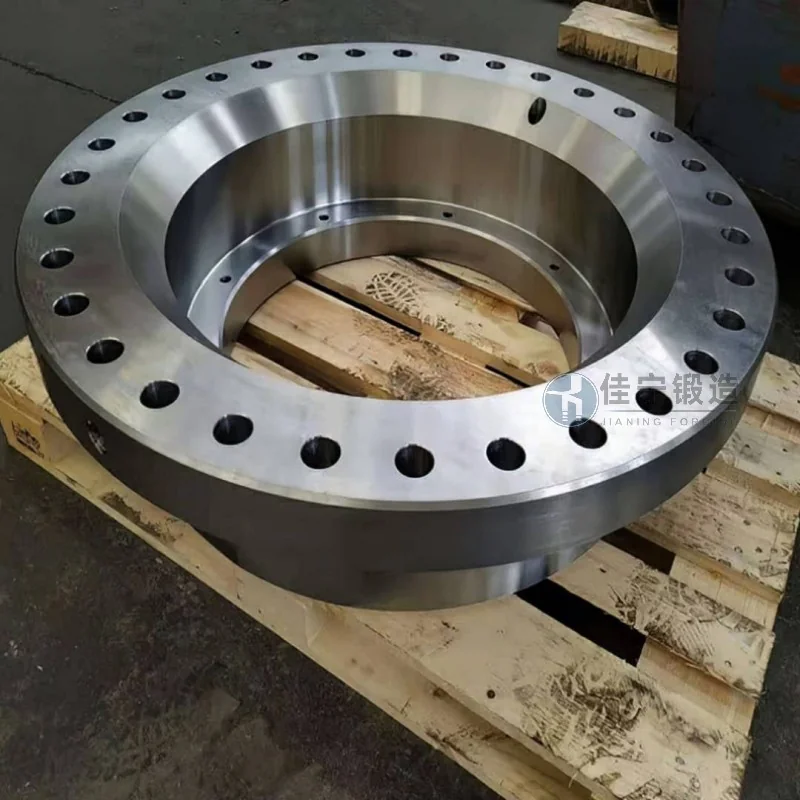
The factory's original ring-shaped forging suppliers had shortcomings in material selection and forging processes, resulting in poor internal microstructure density and uneven grain sizes, making it difficult to withstand continuous impact and alternating loads during mining operations. At the same time, the dimensional tolerances and roundness control of forgings are unstable, making uneven wear easily after assembly and further shortening the component's lifespan. Customers urgently need a ring forging that combines relatively high strength, high toughness, and high dimensional accuracy, in order to reduce failure rates and extend equipment overhaul cycles.
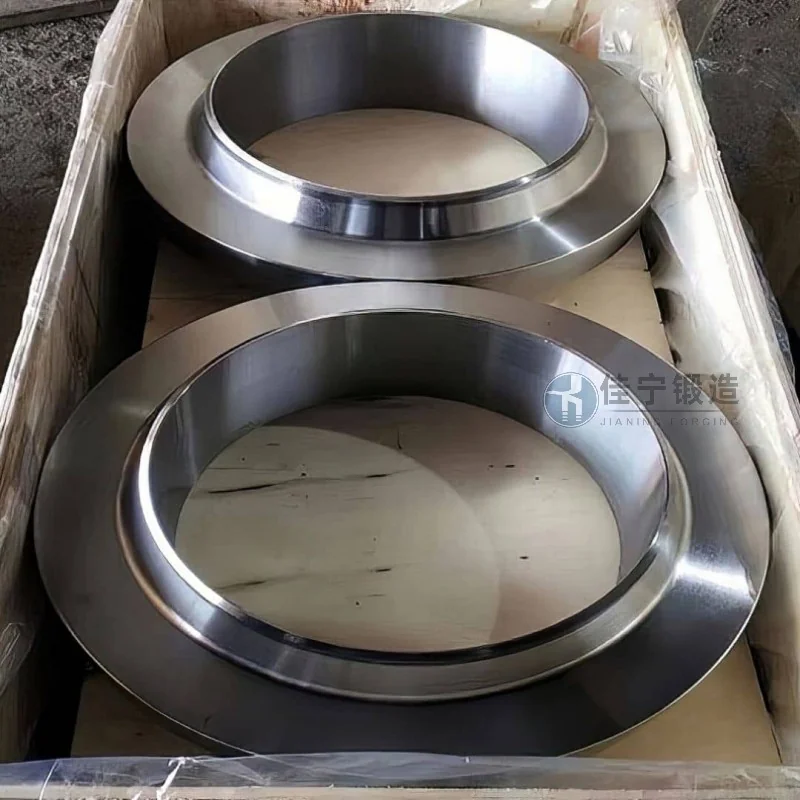
To address these pain points, Jianing Forging leverages mature die forging and ring rolling technology to customize high-performance ring forging solutions for customers. We use high-quality alloy structural steel, refined grains through multi-directional forging technology, and combine with highly accurate temperature-speed control roller rings, which help ensure complete flow lines and uniform structure of forgings. Subsequently, after quenching and tempering heat treatment and full-scale ultrasonic flaw detection, the product's hardness, tensile strength, and impact toughness all meet the stringent requirements of mining equipment. Dimensional tolerances can be controlled within 0.5mm, and roundness deviations below 0.3mm. After actual installation, customers reported a significant improvement in forging service life compared to before, extended continuous operation cycles, and noticeably reduced maintenance frequency.